In the Research Module of AI in Applied Economics module, student teams developed applied research projects that combine AI-enabled measurement with policy-relevant economic analysis. Across the four projects, the central themes were sanctions and trade rerouting, task-level AI exposure in labor markets, EV transition risk, and inflation transmission through production networks.
Each project was structured around a defined empirical question, an explicit data pipeline, and a transparent interpretation strategy. The summaries below provide a consolidated overview of methods, findings, and analytical contribution for each team.

Group 1: Tariffs, Sanctions, and Trade Diversion

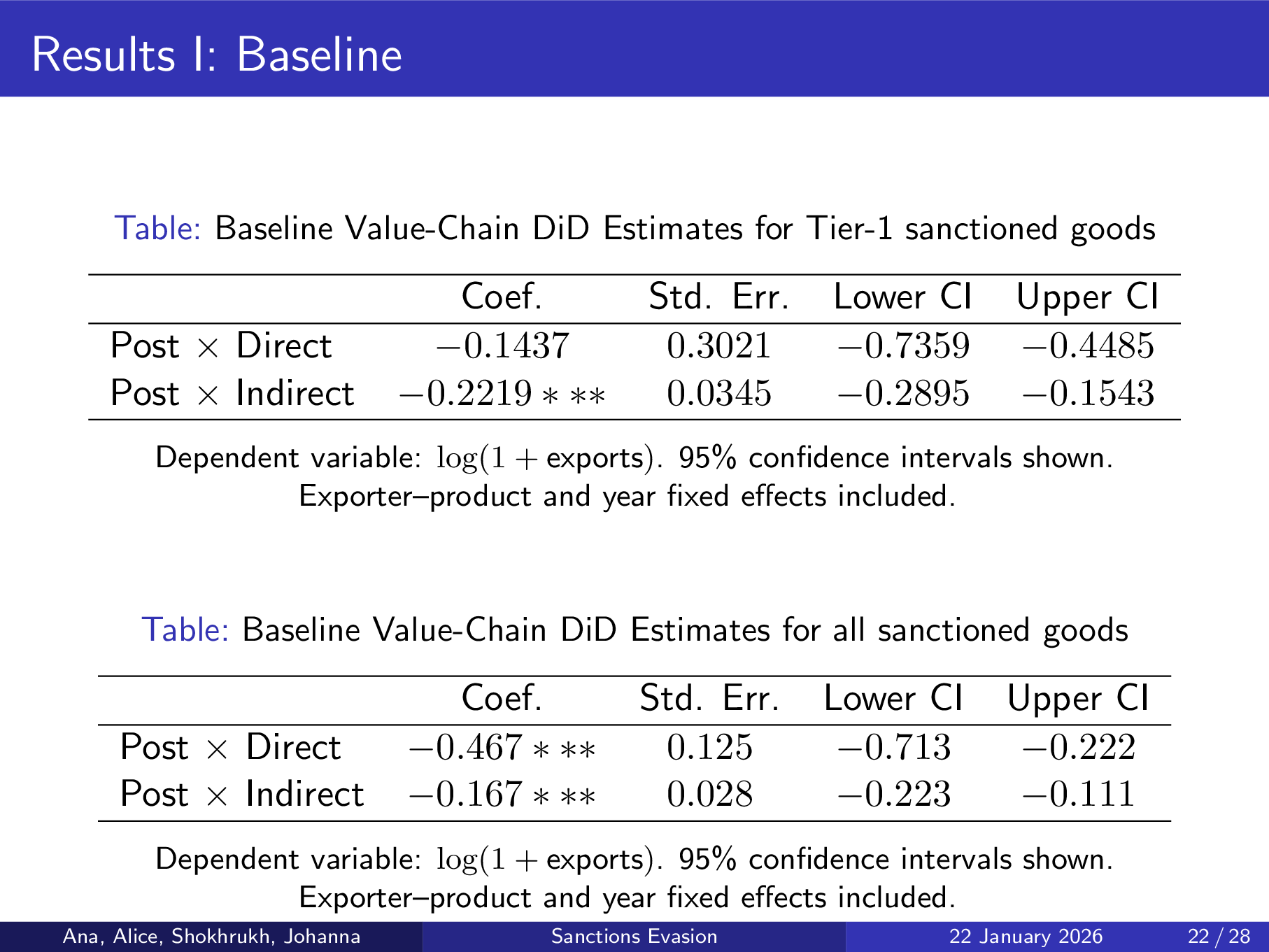
Group 1 examined whether post-2022 sanctions reduced Russia’s access to strategic goods or primarily reconfigured trade through intermediary countries and downstream embedding channels. The empirical design separated direct sanctions effects, indirect exposure via production linkages, and rerouting dynamics, which kept the analysis tightly aligned with the central policy question.
The project used product-level trade data and sanction classifications in a difference-in-differences framework, complemented by rerouting and end-use heterogeneity analysis. The core results were internally consistent: direct sanctioned trade to Russia declined, intermediary channels became more important, and indirectly exposed goods behaved differently depending on whether they were consumption or intermediate inputs.
The final contribution is a short-run assessment of adjustment under sanctions, with clear evidence that network structure and third-country routing are central to understanding policy transmission in trade data.
Related resources: Comments on Section 122 Tariffs | Comments on US Trade War | AIPNET Paper | AIPNET Data
Group 2: AI Task Automation and Labor Markets
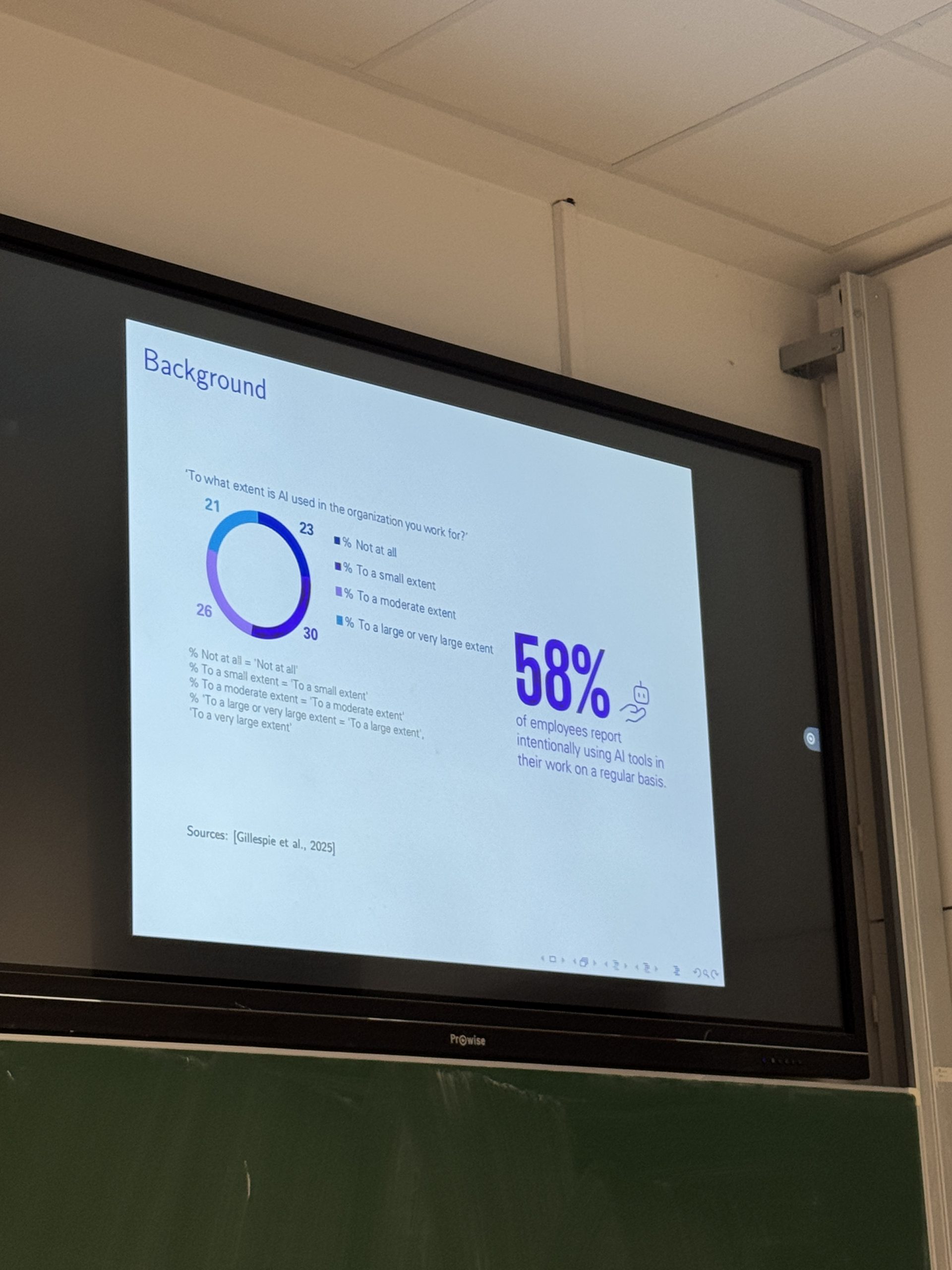
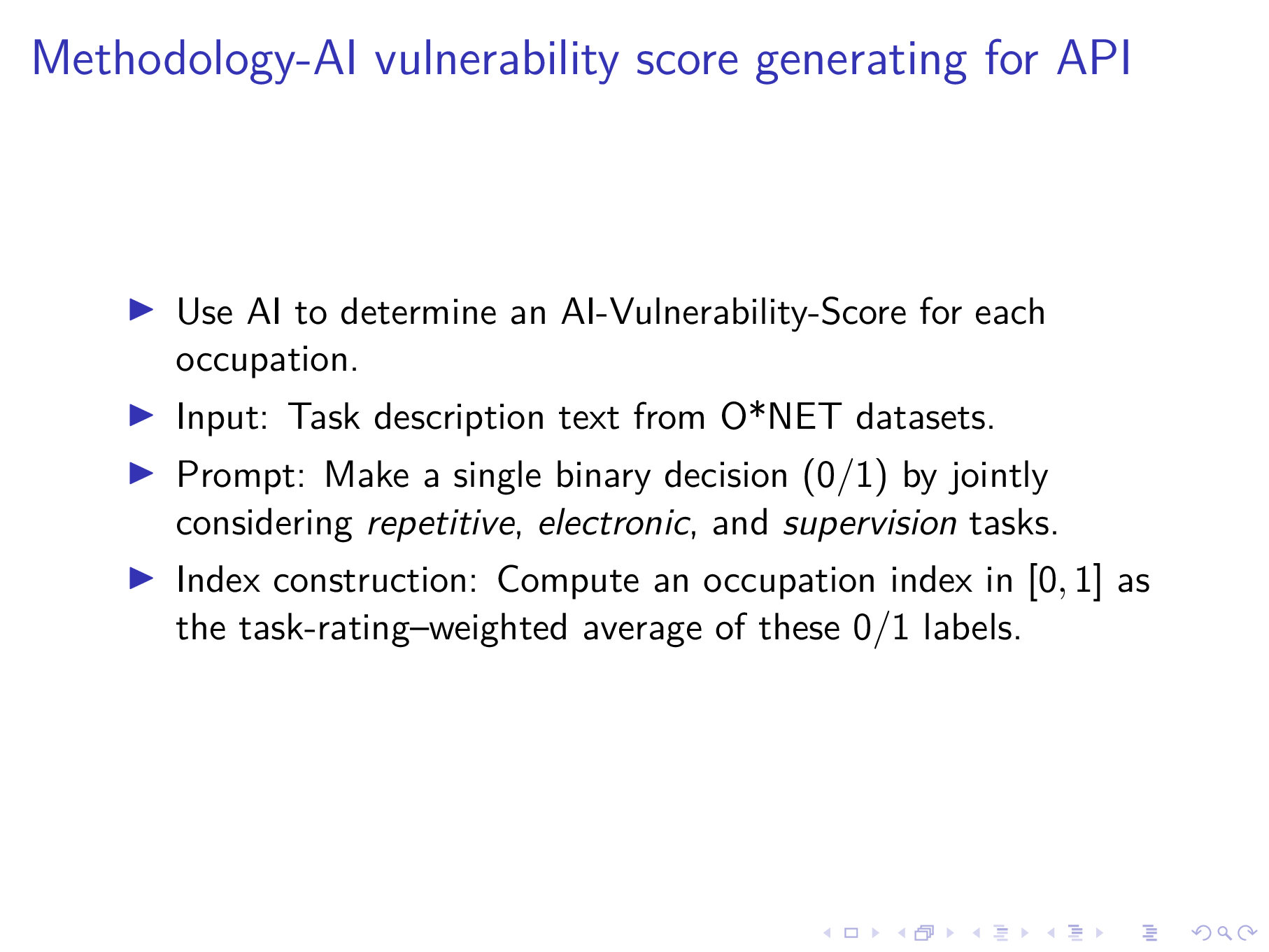
Group 2 developed a task-based AI exposure framework and linked it to US labor-market outcomes. The project built an original vulnerability index from task descriptions, merged that measure with labor-market microdata, and analyzed occupational, sectoral, and regional risk patterns.
A key strength was the treatment of measurement itself as an empirical contribution rather than as an imported index. The workflow integrated O*NET task content, constructed multiple exposure variants, and then tested how those measures align with unemployment risk and distributional heterogeneity across labor-market segments.
The substantive takeaway is that task-level construction materially improves interpretability of AI exposure patterns, while also making clear that the strongest inference depends on explicit prioritization of baseline measure and baseline outcome in the final analytical hierarchy.
Related resources: Use of AI in Government | Thoughts on AI Narratives and Validators
Group 3: EV Transition and Regional Vulnerability

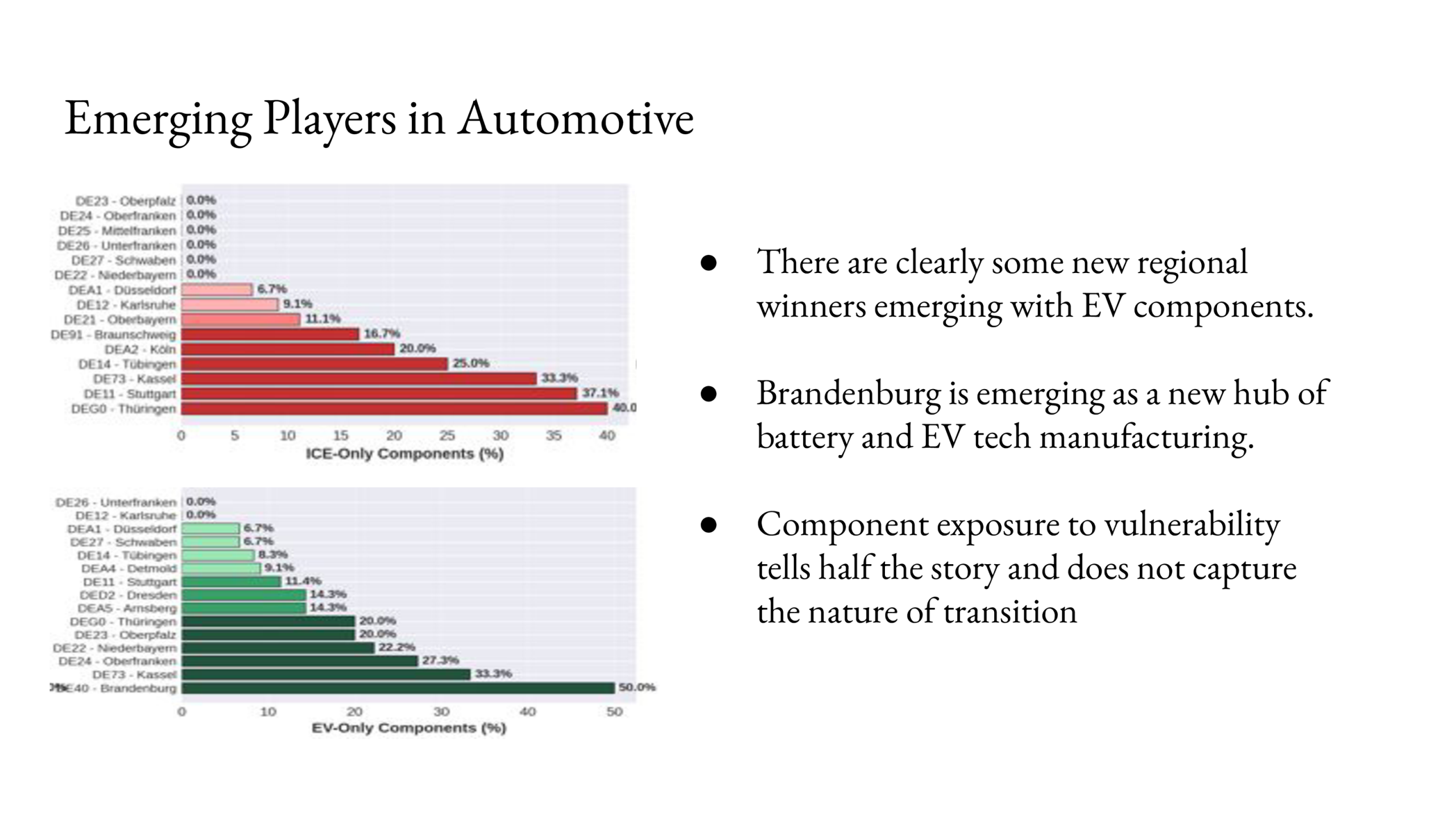
Group 3 built a structured framework to classify automotive components as ICE-only, EV-only, or shared, and then used those classifications to construct a regional vulnerability index for German NUTS-2 regions. The project’s core analytical choice was to separate exposure from vulnerability, rather than treating these as equivalent.
The pipeline moved from product-code mapping and staged AI-assisted classification to producer-level and regional aggregation. This design enabled a more granular interpretation of transition risk by distinguishing legacy specialization from adaptive capacity factors such as diversification and innovation potential.
The result is a transparent measurement framework that is most informative when interpreted as a relative vulnerability index. Its policy value comes from identifying where transition pressure and adjustment capacity diverge across regions, rather than from a single exposure count.
Related resources: AIPNET Methodology | AIPNET Paper | Production Networks and Value Chains
Group 4: Inflation Pass-Through in Production Networks
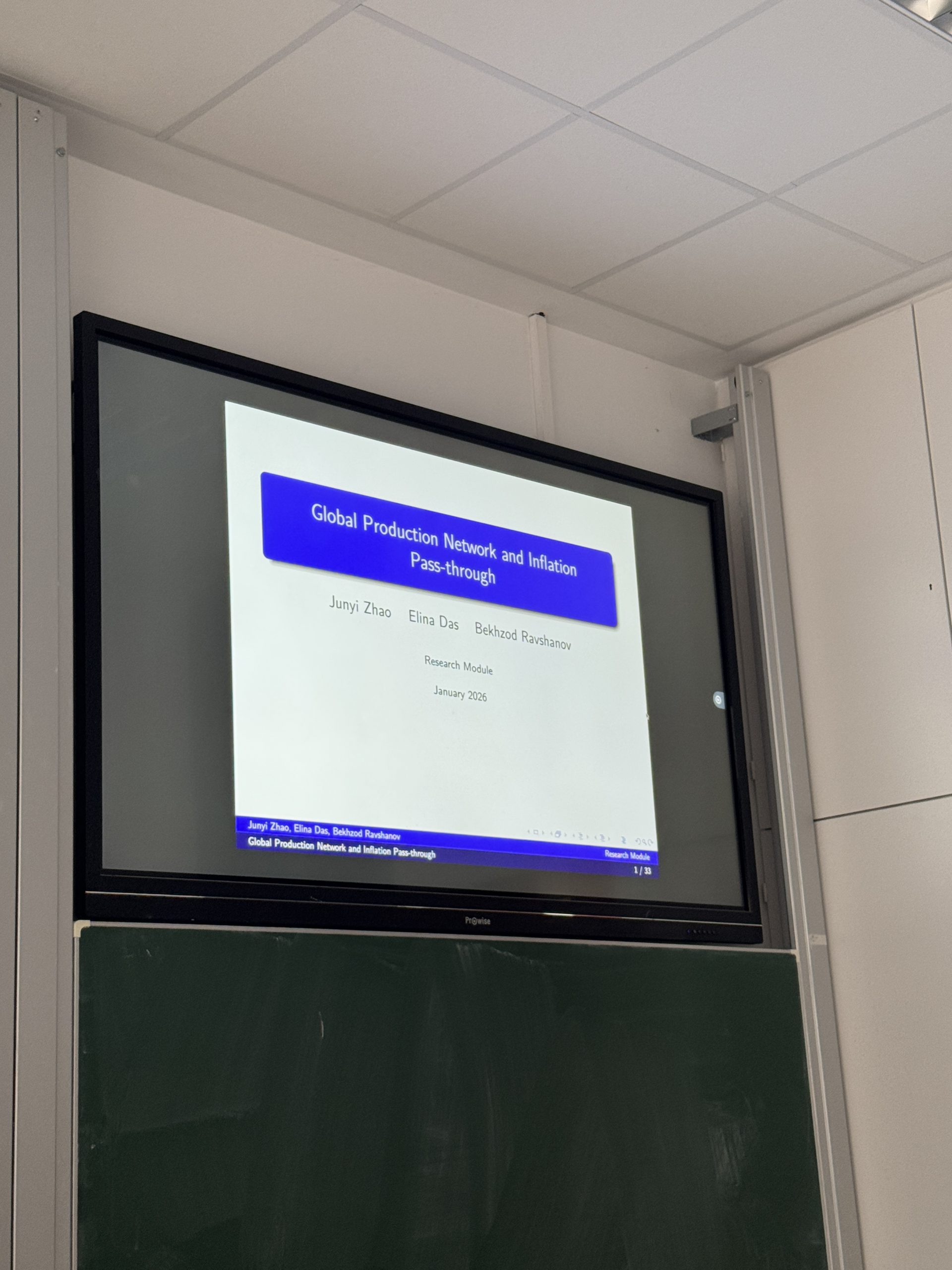
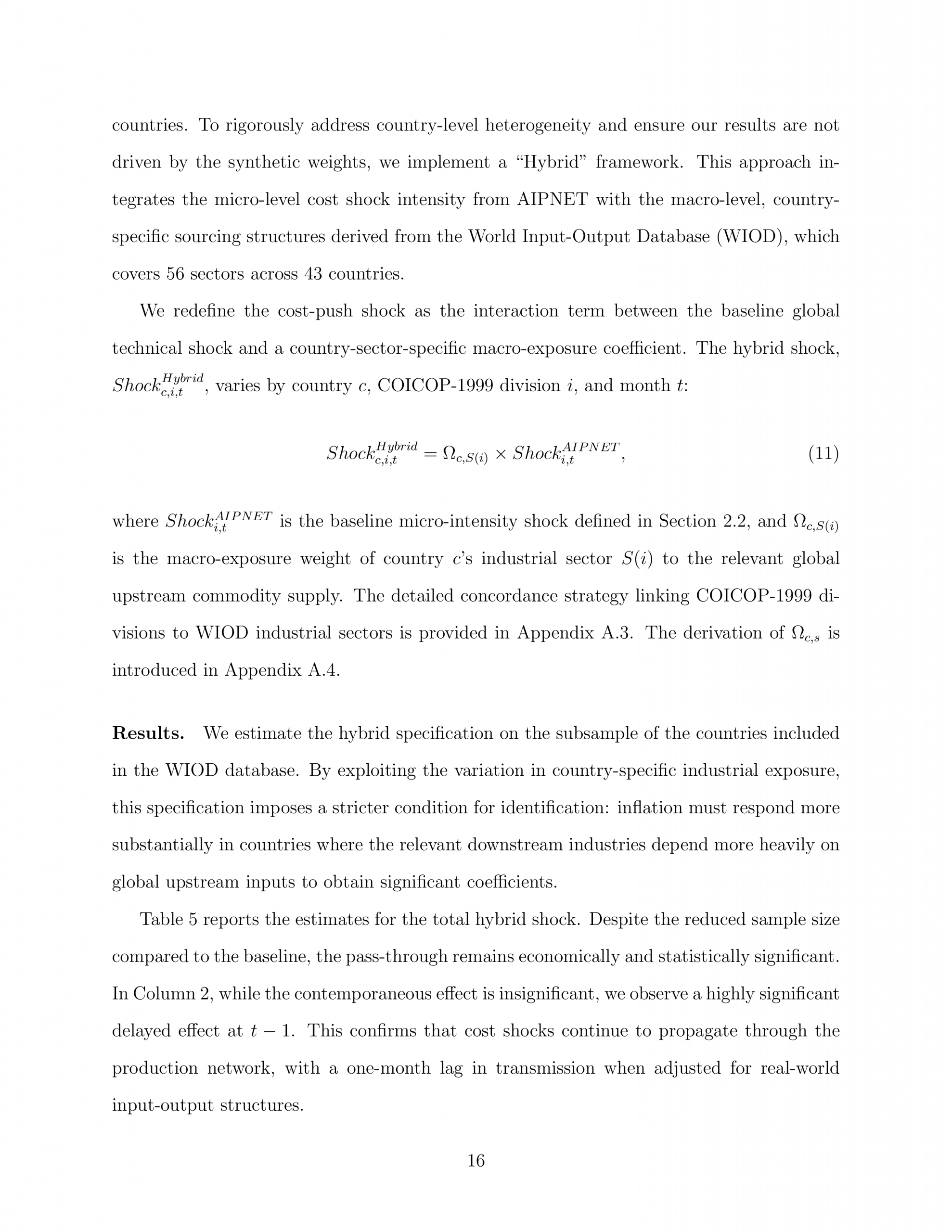
Group 4 analyzed how commodity price shocks propagate into consumer inflation through global production-network linkages. The empirical design connected commodity-level shocks to CPI outcomes through network-weighted exposure measures, then tested pass-through at aggregate, sectoral, and commodity levels.
The project added targeted robustness layers, including hybrid exposure weighting, alternative input-share construction, and within-country analyses for the UK, US, and EU using finer CPI categories. These extensions strengthened the identification of transmission channels beyond highly aggregated category matching.
The main findings pointed to positive pass-through with meaningful heterogeneity in timing and magnitude across agriculture, energy, and metals. The framework is strongest where mapping steps and concordances remain fully auditable alongside the econometric outputs.
Related resources: Network Knowledge | Trade Thaw | AIPNET Paper | AIPNET Data